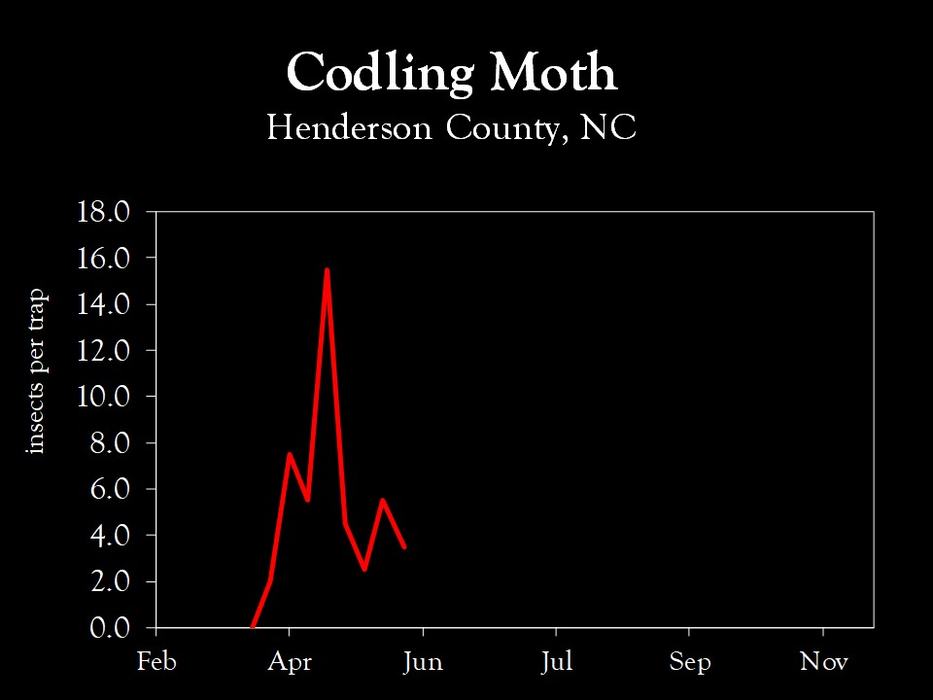
Codling moth degree-day accumulations range from about 530 in Henderson County to 825 in Cleveland/Lincoln Counties. Hence, it remains a potential threat in Henderson County and other locations of similar elevation (≥2,000 ft) with about 80% of first generation adults emerged and 30% of first generation eggs hatched. In lower elevations of Cleveland and Lincoln, first generation flight is nearly complete, with essentially all adults emerged from overwintering and almost 70% of eggs hatched. Once we pass about 650 DD, further insecticide sprays for codling moth are usually not necessary until second generation.
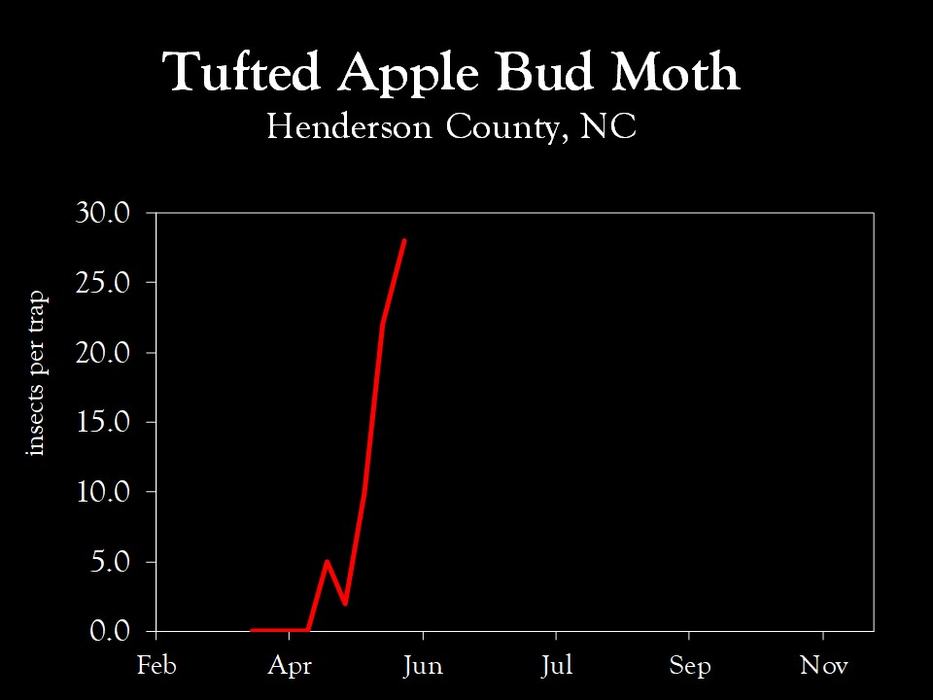
For those locations where tufted apple bud moth is a concern, the ideal timing for control generally occurs during the first two weeks of June. Biofix was curiously late this year, so based on DD accumulations (about 500 in Henderson County) it is still a bit early, but most insecticides should provide the residual control necessary for season-long control. Insecticides recommended include the group 28 MOA diamides such as Altacor, Exeril, or Verdepryn, the group 5 spinosyn Delegate, or Group 18 ecdysone agonist Intrepid.
For those using mating disruption for codling moth and who have not yet applied an insecticide, one of the above materials for TABM is an important spray.
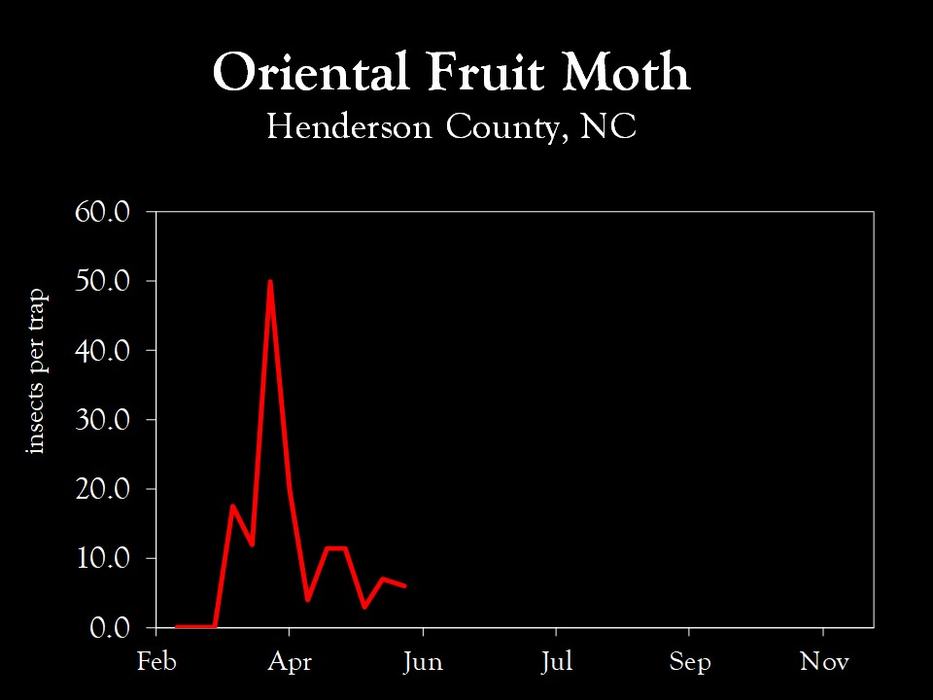
Second generation oriental fruit moth flight has begun emergence in lower elevations, and is expected to begin in Henderson County next week. However, this flight is generally very low and rarely of concern.
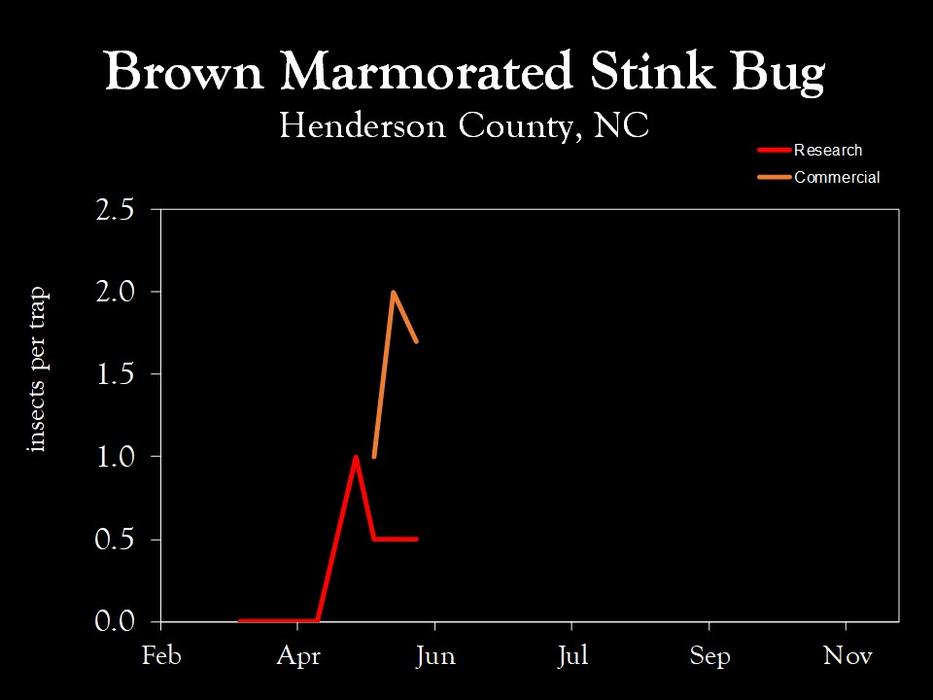
Finally, expect leafhoppers, aphids and mites to continue to be observed with greater frequency, so monitoring for these secondary pests is important during the entire month of June.
Learn more about southeastern apple insect pests at the Apple Insect Management page.