Apologies on the brief delay in getting this posted-blossom blight alerts, a work trip to Raleigh and teaching Master Pomology this morning left me a bit strapped for time. Anyways, lets take a look at the apple scab situation at this point in the season as well as preparations for Glomerella leaf spot, bitter rot, Marssonina leaf blotch (apple blotch) and shoot blight management. If the model calls for it I'm also planning on sending out a blossom blight update later this week, but for now please refer to Sunday's post.
2026 Apple Disease Update: Bloom
Apple Scab
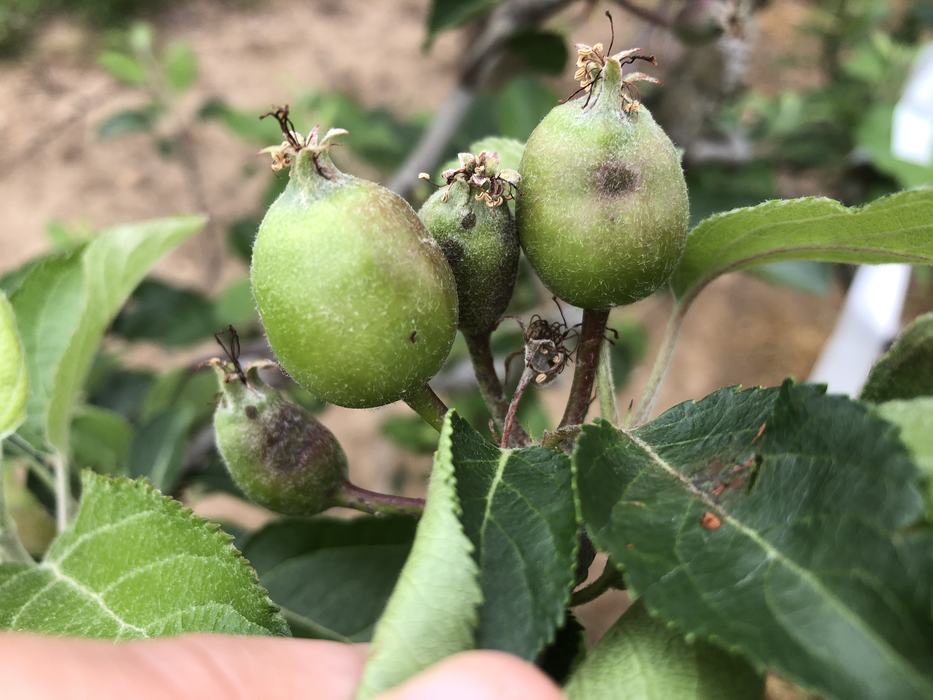
Setting a green tip date on March 5, 2026 in Edneyville NC, ascospore maturity is 58% and only 12% of ascopores of the apple scab fungus, Venturia inaequalis have been released. What are ascospores and what does this mean? Ascospores are the sexual spores of Venturia inaequalis that overwinter in leaf litter on the ground. These spores cause primary (the initial) apple scab infections. Starting at green tip, ascospores start to mature and release during rain events. As of March 30, 2026, there have been 6 days with apple scab infection events. April 1st, should be the most consequential infection event so far this year. By the end of tomorrow's infection, 53% of ascopores are predicted to be released. In addition to your backbone fungicide of mancozeb (3 lb/A), I would consider a strong scab fungicide for tomorrow:
- Miravis (3.4 fl oz/A)
- Aprovia (5.5-7 fl oz/A)
- Inspire Super (12 fl oz/A)
- Cevya (4 fl oz/A)
- Axios (3 fl oz/A)
Marssonina Leaf Blotch (Apple Blotch)
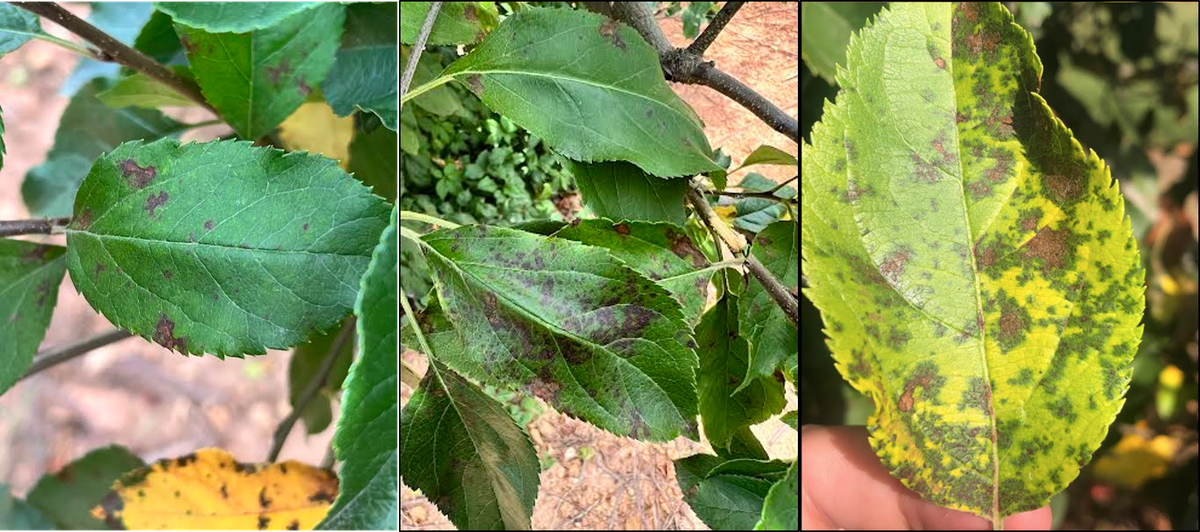
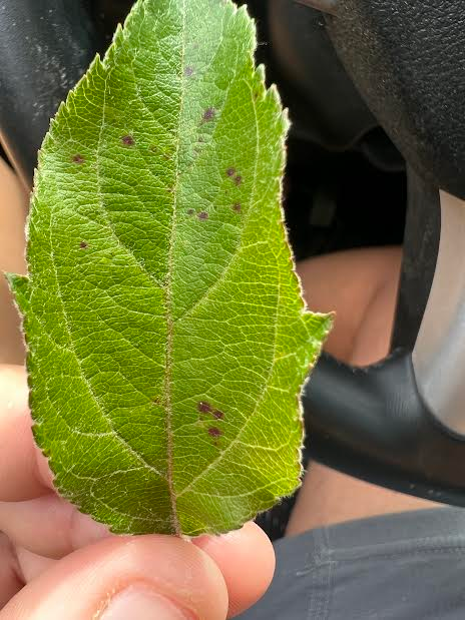
Prior to last year, symptoms of Marssonina leaf blotch, also called apple blotch, have mostly shown up sometime in early June for us here in NC. Further, while most cultivars are susceptible, certainly 'Rome Beauty' has been our indicator tree of sorts in previous years. All changed last year when I first noticed symptoms of MLB rear their ugly head in May while rating for GLS symptoms. Also, symptoms were initially observed in my 'Gala' research block which had marginal disease pressure prior to 2025. Out in Henderson county, several growers and/or consultants were calling me concerned about "spots on their trees that normally don't have Glomerella". However, premature defoliation was fairly prevalent in some orchard blocks. All of this inoculum from 2025 sets up a perfect storm for Marssonina in 2026.
As a refresher, MLB symptoms initiate as small purple flecks or spots on the top surface of leaves. Early symptoms are similar to frogeye leaf spot and Glomerella leaf spot. However, as the disease severity increases, these purple flecks expand and often merge together-no concentric rings are present (as in the case of GLS) and the lesions usually not round (as in the case of frogeye). Further disease progression leads to chlorosis (usually starting on just one half of the mid-vein axis) and eventual defoliation during the summer months.
Serendiptitously, in 2019 we were conducting field trials to evaluate the efficacy of fungicides for apple scab. Treatments commenced at pink and were sprayed every 7 to 14 days through 2nd cover (about 15 days after petal fall). After 2nd cover we stopped spraying fungicides the rest of the season with the hopes of increasing scab infections. Unfortunately, we didn't see much scab; however we noticed significant differences in the efficacy of these "early season" fungicide applications for MLB control.
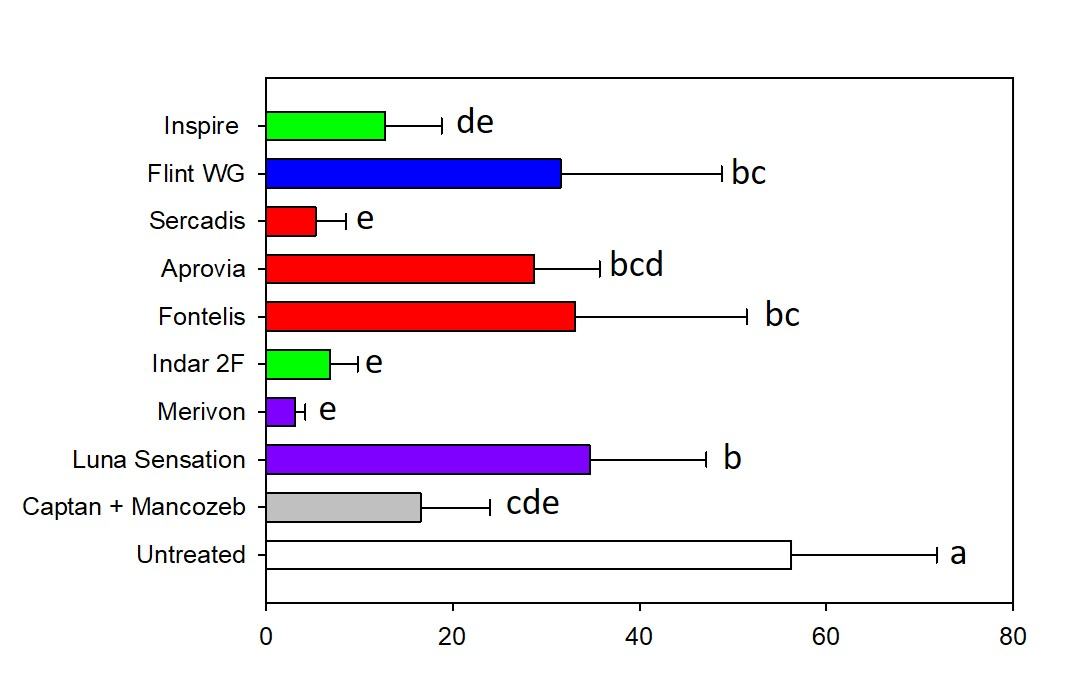
Each fungicide in the chart above was applied for five consecutive applications. While this is not legal for most of these products, it allowed us to evaluate each fungicide directly against each other. Here are some highlights from our accidental MLB trial:
- The strobilurin fungicides were not highly effective against MLB
- DMI fungicides were among the most efficacious fungicides. While we evaluate Indar and Inspire that year, in subsequent years Cevya has demonstrated superior control of MLB.
- SDHI (FRAC 7) fungicides performance was variable. While Aprovia was not strong against MLB, Tesaris/Sercadis (ai = fluxapyroxad) which is the SDHI component of Merivon was among the best performing fungicides.
- Captan/mancozeb had moderate activity, but it's best to include a more efficacious single-site fungicide in tank mixture with a protectant.
In regards to managing MLB, I would be starting your applications this week. Really, a good MLB fungicide doesn't have to be applied weekly-every other sprays (about every 14 days) is sufficient. I would consider this rotation (with strong GLS) fungicides until about 3rd cover, and then captan should be able to carry you the rest of the season.
Glomerella Leaf Spot
While this week is too early in most regions NC to start fungicides applications for GLS, it's not too far out on the calendar. I'll do a more in depth post on GLS management next, but just as a primer, let's look at a little trial data from last year. In 2025, we staggered captan applications in our GLS research block at the MHCREC beginning at late bloom (LB) through 5th cover. In other words, one treatment received its first fungicide application at LB, another treatment at petal fall (PF), another treatment at first cover (1C) and so forth up through 5th cover. We were curious regarding the best timing to initiate GLS sprays. Unfortunately in doing this trial, the treatment sprayed at bloom had more overall fungicide sprays than the treatment that began at 5th cover, but there were no ways I could think of to control for that. Anyways, treatments were applied weekly for a total of 13 applications (in the late bloom treatment).
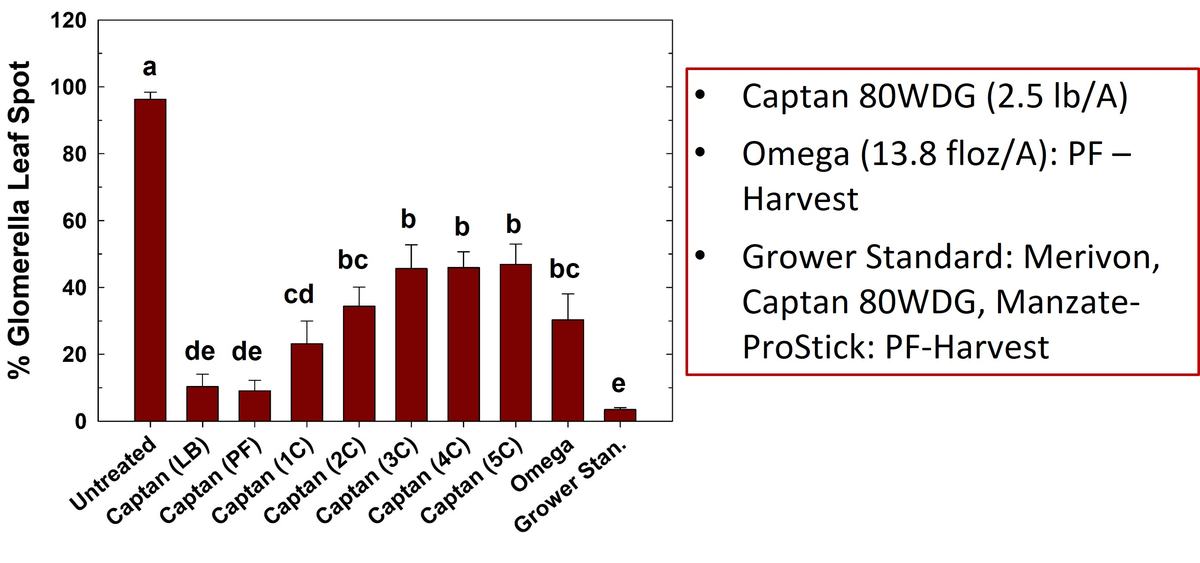
As you can see above, beginning captan applications at late bloom/early petal fall in 2025, resulted in the best control of GLS of all staggered-start captan applications in this trial. While initiating GLS programs at 1st cover, was not statistically different from the earlier start timings, a greater overall incidence of GLS was observed. In 2025, initiating sprays at 2nd cover or later, led to a higher disease incidence, but still 50% of the incidence had we not treated all.
Shoot Blight
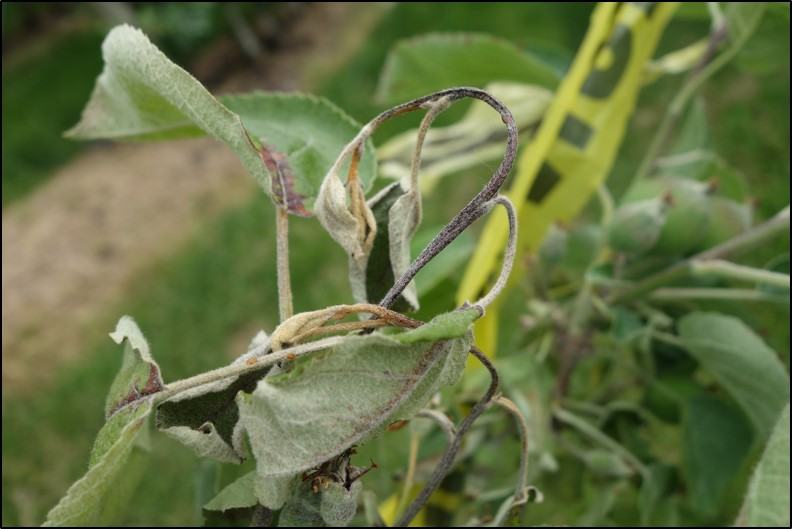
Lastly, in regards to shoot blight, if you're in bloom/late bloom you may want to initiate Kudos applications in those blocks only for shoot blight control. Make sure to follow the label in regards to adjuvants. In your youngest blocks, consider 3 to 6 oz/100 gal. In more mature blocks, I'd suggest the higher rate of 12 oz/100 gal. Stay tuned next week for a more in depth discussion.
Final Thoughts for Bloom Sprays
- If you sprayed a DMI (FRAC 3) last week, consider a highly efficacious scab fungicide this week (e.g. Aprovia, Miravis, Axios)
- If you did not apply a DMI last week, consider an application of Inspire Super or Cevya this week. This will also control for cedar apple rust.
- I would not initiate strobilurins for GLS/bitter rot control this week. However, next week for some areas may be a good time to have Cabrio, Flint Extra, Merivon, Pristine, or Luna Sensation on hand....
- In blocks that were in bloom early, consider your first application of Kudos this week. I will be sending out blossom blight infection alerts as warranted.