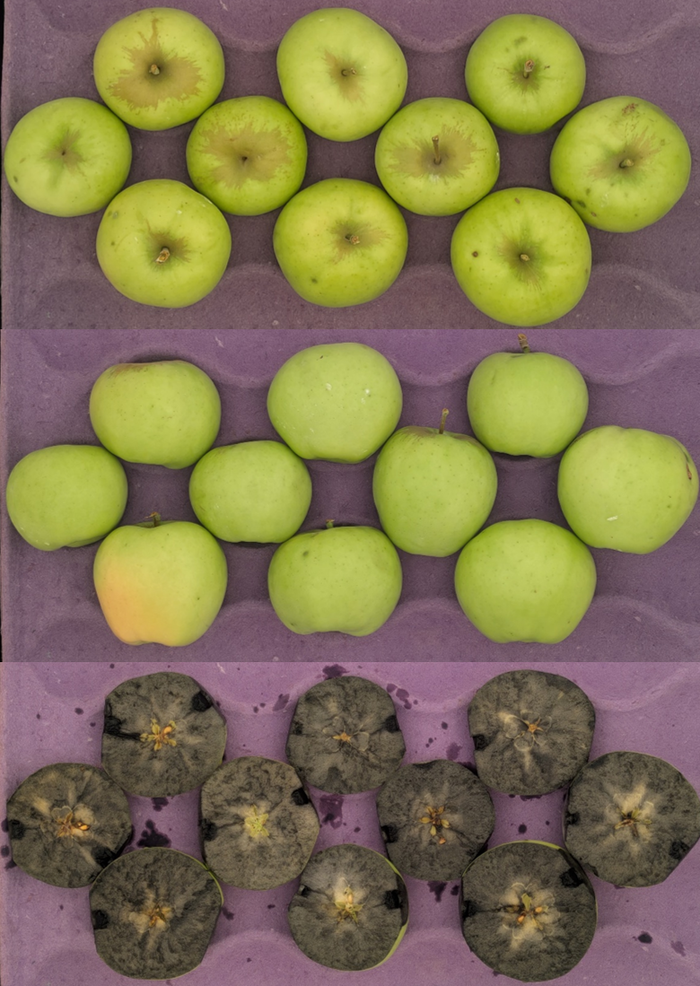
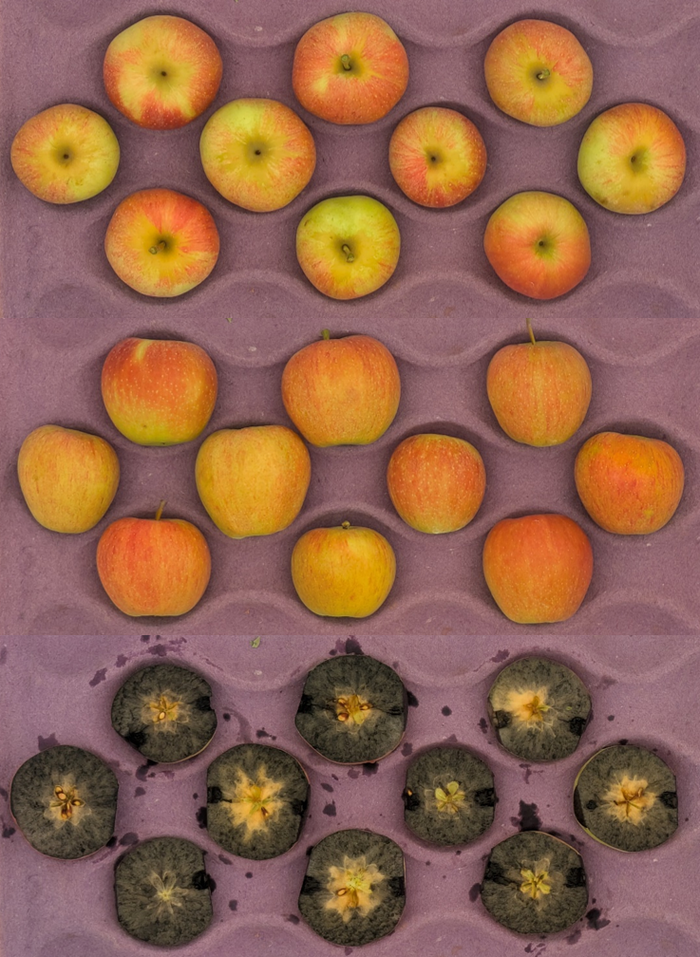
In cooperation with the Henderson County Master Pomology Program, we initiated an effort to monitor apple fruit maturity in commercial orchards in Henderson County, NC. The goal of this program is to provide timely updates regarding fruit maturity of several apple cultivars in the region. Data will be presented weekly to commercial apple growers via web-based updates to partly aid in harvest management decisions. Please note that the data presented is limited to the specific orchard block that we used for sampling. Do not assume that fruit at your location are at the same stage of maturity. To be clear, there is no substitute for regular monitoring of fruit quality parameters at your own operation.
Weekly Update (07.30.2025)
Ginger Gold fruit size would seem to indicate the crop has reached maturity; however, other parameters such as soluble solids and starch pattern ratings continue to indicate they are immature (Table 1). Of note, is the continued decrease in firmness across weeks.
Gala starch pattern index rating averaged 2.5 this week (Table 2). Starch rating indices ranged from 1 to 6, where the majority were rated below 3.This variability in sampling may be attributed to the increasingly high temperatures this week and position of apples in the canopy. Also, some fruit maturity indicators (i.e. starch pattern index) are not as reliable under these conditions. A 12% increase in fruit weight and 22% increase in marketable blush was observed this week while all other fruit quality parameters did not change dramatically (Table 2).
Elevated temperatures this past week fortunately did not result in sunburn on sampled Ginger Gold and Gala fruit.
For those that are interested in managing fruit maturity using plant growth regulators (PGRs), caution needs to be exercised during this heat wave. It may be best to avoid using PGRs to manage fruit maturity during this heat wave if at all possible. If this is unavoidable, please consider the following:- Applying PGRs during the heat of the day is generally not advisable. Apply products when temperatures are cool and when drying conditions are slow (early morning or in the evening).
- Warm temperatures near application and harvest can result in more rapid metabolism of products used to manage fruit maturity. In these situations, close monitoring of fruit maturity is needed to determine if another application is necessary.
- Where an organosilicone surfactant is used (ReTain®), this can result in damage to fruit if heat is excessive. Using the lower rate of organosilicone surfactant (0.05%; 6.4 fl. oz. per 100 gallons) is suggested to minimize risk of injury during periods of heat stress.
- Higher application rates of NAA (>10 ppm) may cause fruit softening at temperatures above 85°F.
- Using PGRs to Manage Apple Preharvest Drop, Fruit Maturity, and Harvest Timing
- Apple Harvest Management Considerations: Special Focus on Gala